
MDI vs TDI – Differences, Uses & Applications
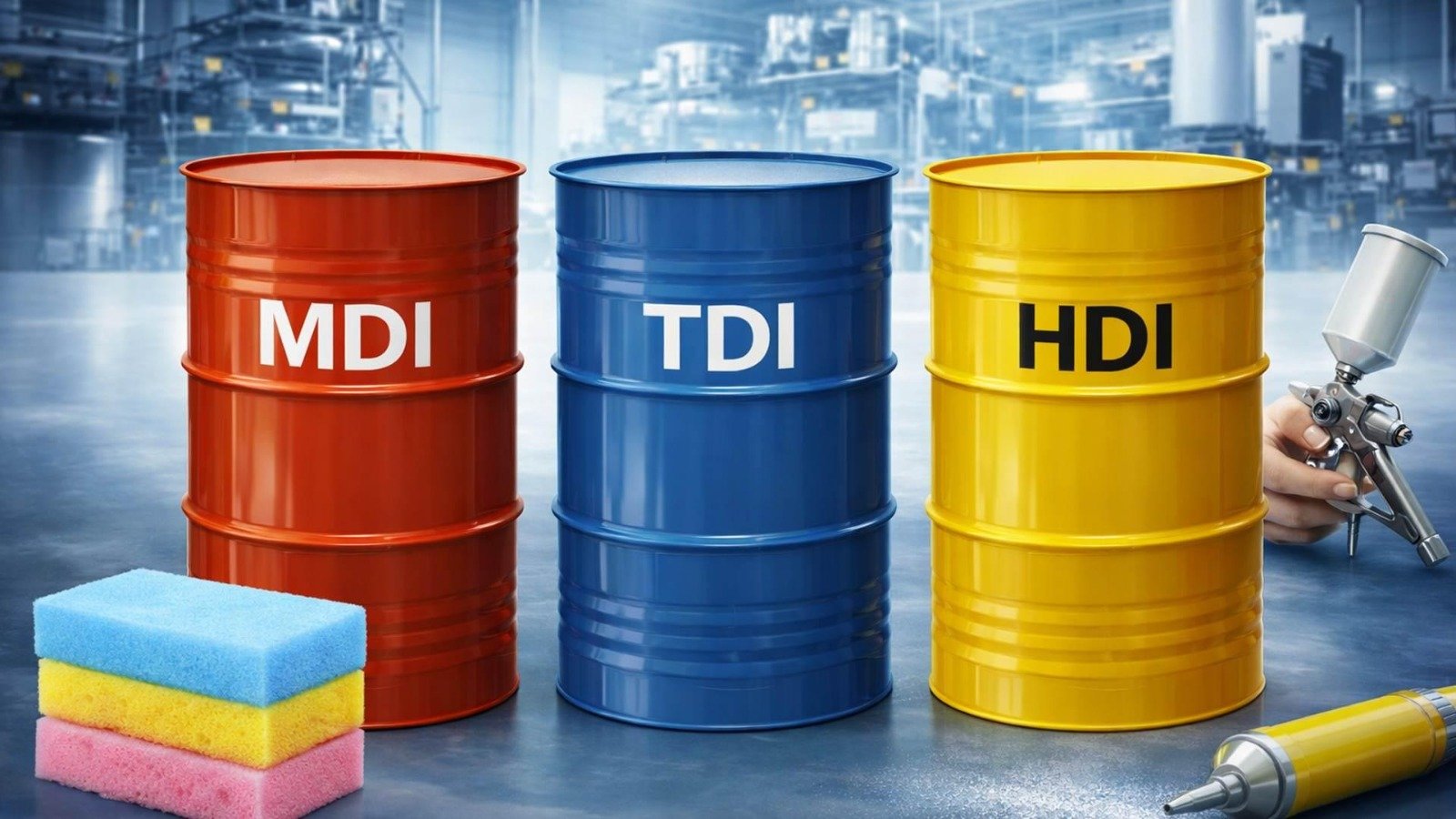
MDI and TDI are two of the most important chemical raw materials used in the polyurethane manufacturing industry. Both belong to the isocyanate family and play a major role in producing polyurethane foams, insulation materials, elastomers and several other industrial products.
Although MDI (Methylene Diphenyl Diisocyanate) and TDI (Toluene Diisocyanate) are both used in polyurethane production, they have different chemical structures, physical properties, processing characteristics and industrial applications.
Understanding the differences between MDI and TDI is important for manufacturers who want to select the right raw material for their polyurethane production requirements.
From flexible foam used in mattresses and furniture to rigid foam used in construction and refrigeration, both chemicals support different applications across modern industries.
In this blog, we will explain what MDI and TDI are, their key differences, benefits, uses and industrial applications.
What Is MDI (Methylene Diphenyl Diisocyanate)?
MDI stands for Methylene Diphenyl Diisocyanate. It is an aromatic diisocyanate widely used in the production of polyurethane materials.
MDI reacts with polyols to form polyurethane polymers with different physical and mechanical properties. Depending on the grade and formulation, it can be used to manufacture rigid foam, flexible foam, elastomers, coatings, adhesives and other polyurethane products.
MDI is available in different commercial grades, including polymeric MDI and pure or monomeric MDI. Each grade is suitable for specific industrial applications.
Major Uses of MDI
Rigid polyurethane foam manufacturing
Thermal insulation panels
Refrigerator and freezer insulation
Construction insulation materials
Automotive components
Polyurethane elastomers
Industrial coatings and adhesives
MDI is particularly important in rigid polyurethane foam production because suitable MDI-based formulations can provide excellent insulation performance and structural properties.
What Is TDI (Toluene Diisocyanate)?
TDI stands for Toluene Diisocyanate. It is another aromatic diisocyanate commonly used in polyurethane manufacturing.
TDI reacts with polyols to produce polyurethane materials with different characteristics depending on the formulation. It is especially well known for its use in flexible polyurethane foam production.
Commercial TDI commonly includes 80/20 and 65/35 isomer mixtures, referring to the proportions of the 2,4-TDI and 2,6-TDI isomers.
TDI is widely used in applications where cushioning, flexibility and comfort are important.
Major Uses of TDI
Flexible polyurethane foam production
Mattress manufacturing
Sofa and furniture cushions
Automotive seating
Upholstered furniture
Industrial cushioning materials
Selected polyurethane coatings and elastomers
TDI is particularly popular in flexible foam manufacturing because it supports the production of soft and resilient foam materials.
MDI vs TDI: Key Differences
Although MDI and TDI are both used in polyurethane manufacturing, they differ in several important ways.
1. Chemical Structure
MDI contains two aromatic rings connected by a methylene bridge, whereas TDI contains a toluene-based aromatic structure with two isocyanate groups.
These structural differences influence their physical properties and suitability for different polyurethane formulations.
2. Molecular Weight
MDI has a molecular weight of approximately 250.25 g/mol, while TDI has a molecular weight of approximately 174.16 g/mol.
Their molecular weight differences are relevant when calculating formulation requirements and selecting suitable processing conditions.
3. Physical Properties
MDI is available in different grades and can be liquid or solid depending on its composition and temperature. Polymeric MDI is generally supplied as a liquid.
TDI is generally a clear to pale yellow liquid under normal storage conditions.
4. Industrial Applications
MDI is widely used in rigid polyurethane foam, insulation systems, elastomers and other specialized applications.
TDI is particularly associated with flexible polyurethane foam used in mattresses, furniture and automotive seating.
5. Foam Manufacturing
MDI-based systems are commonly used for rigid foam applications, although certain MDI grades and formulations are also used in flexible foam.
TDI is widely used in conventional flexible polyurethane foam systems.
6. Processing Characteristics
MDI and TDI have different reaction and handling characteristics. Their reactivity, viscosity, formulation requirements and processing conditions depend on the selected grade and polyurethane system.
Manufacturers must follow appropriate technical specifications when selecting either material.
MDI vs TDI Comparison Table
| Parameter | MDI | TDI |
|---|---|---|
| Full Form | Methylene Diphenyl Diisocyanate | Toluene Diisocyanate |
| Chemical Type | Aromatic diisocyanate | Aromatic diisocyanate |
| Molecular Weight | Approx. 250.25 g/mol | Approx. 174.16 g/mol |
| Common Grades | Polymeric MDI, Pure MDI | TDI 80/20, TDI 65/35 |
| Major Application | Rigid foam | Flexible foam |
| Other Applications | Insulation, elastomers, adhesives | Furniture, mattresses, automotive seating |
| Main Industry | Construction and industrial manufacturing | Furniture and automotive industries |
Major Industrial Applications of MDI
MDI is used in several industries because of its suitability for producing different polyurethane materials.
1. Construction Industry
MDI is widely used in rigid polyurethane foam systems for construction insulation applications.
These foams are used in insulated panels, roofs, walls and other building insulation products. They help reduce heat transfer and improve building energy efficiency.
2. Refrigeration Industry
The refrigeration industry uses MDI-based polyurethane systems to manufacture insulation for refrigerators, freezers and cold storage equipment.
Rigid polyurethane foam provides excellent thermal insulation and helps maintain the required internal temperature.
3. Automotive Industry
MDI is used in selected automotive polyurethane applications, including rigid foam components, molded parts, seating systems and insulation materials.
These products can contribute to vehicle comfort, durability and lightweight construction.
4. Industrial Manufacturing
MDI is also used in producing polyurethane elastomers, adhesives, coatings and specialized industrial components.
Depending on the formulation, these products can provide mechanical strength, durability and chemical resistance.
Major Industrial Applications of TDI
TDI is especially important in the flexible polyurethane foam industry.
1. Mattress Manufacturing
TDI is widely used in flexible polyurethane foam formulations for mattress production.
These foams provide cushioning, softness, resilience and support, helping manufacturers produce different types of mattresses.
2. Furniture Industry
Sofas, cushions, upholstered chairs and other furniture products commonly use flexible polyurethane foam manufactured with TDI-based systems.
The foam provides comfort and cushioning for residential and commercial furniture.
3. Automotive Seating
TDI-based flexible foam is used in automotive seating systems, headrests, armrests and other cushioning components.
These materials help improve passenger comfort and provide suitable support.
4. Bedding and Cushioning Products
TDI is also used in manufacturing pillows, cushions, bedding products and other flexible foam components.
5. Industrial Foam Applications
Flexible polyurethane foam manufactured using TDI is used in various cushioning and packaging applications where suitable softness and resilience are required.
Which Is Better: MDI or TDI?
There is no universal answer to which chemical is better because MDI and TDI are designed for different polyurethane applications.
The right choice depends on the final product, manufacturing process and required performance characteristics.
Choose MDI when:
Manufacturing rigid polyurethane foam.
Producing thermal insulation materials.
Manufacturing refrigeration insulation systems.
Developing selected polyurethane elastomers and industrial products.
Choose TDI when:
Manufacturing conventional flexible polyurethane foam.
Producing mattresses and furniture cushions.
Manufacturing automotive seating foam.
Developing flexible cushioning materials.
The final selection should always be based on the formulation, technical specifications and application requirements.
Important Safety Considerations When Handling MDI and TDI
Both MDI and TDI are reactive industrial chemicals that require appropriate handling and storage procedures.
Exposure to isocyanates can cause respiratory irritation and occupational asthma, including sensitization. TDI is particularly volatile compared with polymeric MDI, while MDI can also cause serious health effects through inhalation or skin exposure.
Manufacturers and chemical handlers should follow these safety precautions:
Use suitable chemical-resistant gloves and protective clothing.
Provide appropriate ventilation and exposure controls.
Follow the product Safety Data Sheet (SDS).
Use suitable respiratory protection according to workplace risk assessments.
Avoid direct skin and eye contact.
Store chemicals in properly sealed and suitable containers.
Ensure trained personnel handle and transfer these materials.
Proper safety management is essential for maintaining a safe industrial working environment.
How to Select the Right MDI or TDI Supplier?
Choosing a dependable supplier is important for maintaining consistent polyurethane manufacturing operations.
Before selecting an MDI or TDI supplier, businesses should consider:
Product grade and technical specifications.
Consistency of raw material quality.
Availability and supply reliability.
Safety Data Sheets and technical documentation.
Proper packaging and storage conditions.
Customer service and technical support.
Compliance with applicable chemical safety requirements.
Working with a reliable industrial chemical supplier can help manufacturers maintain consistent production standards and meet their application requirements.
Future Demand for MDI and TDI
The demand for MDI and TDI continues to be supported by the growing use of polyurethane materials across multiple industries.
The construction industry requires efficient insulation materials, while the furniture and automotive sectors continue to use flexible polyurethane foam for comfort and cushioning.
Refrigeration, footwear, packaging and industrial manufacturing also create demand for specialized polyurethane systems.
As manufacturers focus on improved product performance, energy efficiency and advanced material formulations, MDI and TDI will continue to play important roles in polyurethane manufacturing.
Why Choose Innovis Polychem?
Innovis Polychem understands the importance of industrial chemical raw materials in modern manufacturing.
With a focus on quality-oriented solutions and customer satisfaction, Innovis Polychem aims to support businesses with their industrial chemical requirements.
Choosing suitable polyurethane chemicals is an important step in achieving consistent manufacturing results and maintaining product quality.
For businesses looking for polyurethane raw material solutions, Innovis Polychem offers an opportunity to discuss their requirements and explore suitable product options.
Conclusion
MDI and TDI are two essential isocyanates used in polyurethane manufacturing. Although both chemicals react with polyols to produce polyurethane materials, they have different chemical structures, physical properties and industrial applications.
MDI is widely used in rigid polyurethane foam, insulation, refrigeration and selected industrial applications, whereas TDI is particularly important in flexible polyurethane foam used in mattresses, furniture and automotive seating.
